
You may think that I am talking about the Pachira aquatica plant, also known as the “Money Tree”. But no. I mean bread and butter, a pretty penny or any other phrase that’s used to describe the physical or virtual object that we use to acquire goods.
Last month we talked about compound interest (if you don’t know what that is, check out our March blog) where we looked at the effect of time and interest if money is managed correctly. We use a simple example where if we deposited a thousand dollars just once and let it grow for thirty years at a rate of ten percent, we would have a total of $17,449.40*.
However, a question remained: What would happen if we deposit more than once?
Just as a newly planted fruit tree takes time to produce fruit and delight us, money that has just been “planted” takes time to delight our pockets… and continue to delight us. That is why we first need to know and master the two periods that will allow us to have in the future (especially in retirement) and at the same time not run out.
The first period is called ACCUMULATION. The second is DISTRIBUTION (which we will see in the next blog).
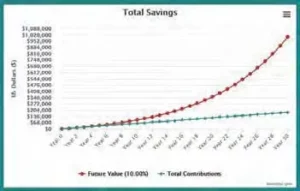
I remember a singer who wanted to be on the radio and earn his first million. But if you are not a successful musician and you would like to have a one and six zeros in your retirement account, do you know when you need to invest daily? Well, if your projection is to retire in thirty years, you only need to dedicate $16* dollars daily.
If you discipline yourself, you will only have invested a total of approximately $180,000 in thirty years*. However, time and persistence will have quintupled (and added a little more) your investment thanks to compound interest.
Would you be able to sacrifice what for some is an hour of work, and invest it in your future?
 English
 Español
